
History
The Secret Behind the Piano’s 88 Keys
4 min read
The modern piano keyboard has 88 keys, but this was not always the case. When the first pianos were created in the early 18th century by Bartolomeo Cristofori, the instrument had a much smaller range than the pianos we know today.
As composers started creating more complex music, they wanted the piano to express a wider variety of sounds. They began writing passages that reached higher and lower notes, and piano builders responded by expanding the keyboard. Over time, manufacturers added more keys, allowing musicians to explore deeper bass sounds and brighter high notes.
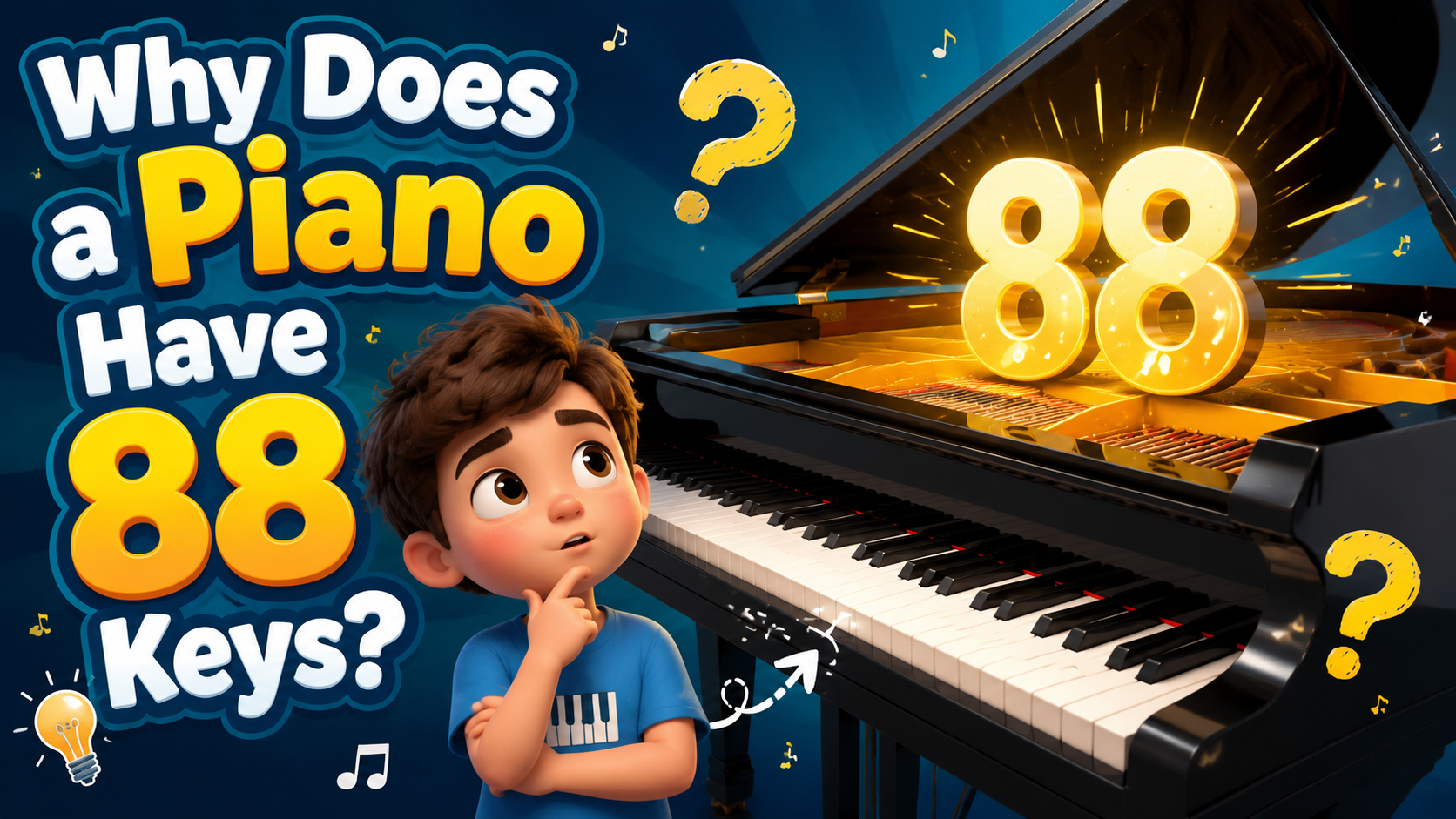
By the late 19th century, the 88-key piano had become the standard design. This range includes seven complete octaves, plus a few additional notes at the top and bottom of the keyboard. It gives pianists enough space to perform a large part of the musical repertoire, from powerful low sounds to delicate high melodies.
The number 88 is not special because of a scientific rule or a magical reason. It became the standard because it represents a practical balance. A pianist can comfortably reach and control this range with two hands, audiences can clearly hear the frequencies produced by the instrument, and builders can create a piano that is strong, reliable, and responsive.
Adding more keys might seem like an improvement, but it also creates challenges. A larger keyboard would make the instrument heavier, more expensive, and more difficult to build, while offering limited musical advantages.
The 88-key piano is therefore a perfect example of how music and engineering work together. It represents a balance between human creativity and practical design — a carefully crafted instrument that allows musicians to explore countless musical ideas.