
Culture
Pianos Around the World
4 min read
# The Piano Around the World: A Journey Through Musical Cultures
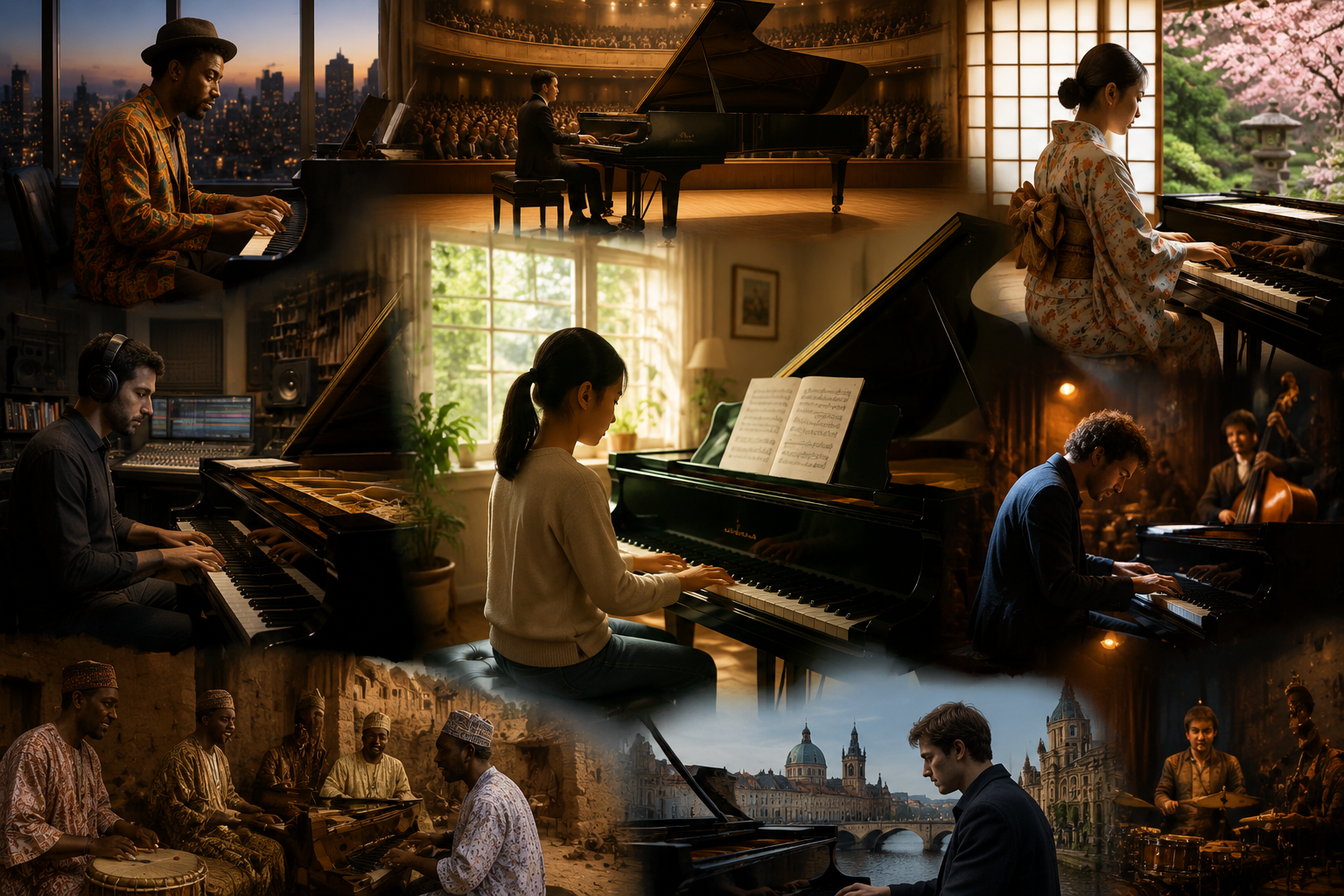
The piano is one of the most recognized musical instruments in the world. Its sound can be heard in small homes, large concert halls, classrooms, churches, theaters, and recording studios. Although the piano was invented in Italy more than 300 years ago, it has traveled across continents and become part of many different musical traditions.
In some countries, the piano is strongly connected to family life and music education. Many children begin their musical journey at home, practicing simple melodies with the support of their families. In places such as Japan, South Korea, China, and many European countries, piano study is a common part of childhood music education. For many families, learning the piano is not only about becoming a professional musician, but also about developing discipline, creativity, listening skills, and a lifelong connection with music.
In other places, the piano is more closely associated with professional performance. Famous concert halls around the world welcome pianists who perform works by composers such as Ludwig van Beethoven, Wolfgang Amadeus Mozart, Frédéric Chopin, Claude Debussy, and many others. These performances continue a long tradition of sharing great musical works with audiences around the world.
The piano also plays an important role in schools and universities. Music students use it to understand harmony, melody, rhythm, and musical structure. Because a pianist can play many notes at the same time, the instrument is especially useful for learning how music is built. Many composers, singers, conductors, and other musicians use the piano as a tool for creating and studying music, even if piano is not their main instrument.
Beyond classical music, the piano has become an essential instrument in many musical styles. In jazz, pianists have used the instrument to create new approaches to harmony, improvisation, and rhythm. Artists such as Duke Ellington, Thelonious Monk, and many others expanded the possibilities of piano playing and helped shape the sound of jazz.
The piano also found a special place in popular music. Songwriters often use it to create melodies and accompany their voices. From ballads and movie soundtracks to rock, pop, and contemporary music, the piano continues to inspire musicians to create emotional and memorable songs.
Around the world, pianists have also combined the piano with local musical traditions. In different cultures, musicians have explored ways to connect the instrument with folk melodies, traditional rhythms, and regional sounds. The piano has been adapted to many musical environments, showing that an instrument created centuries ago can continue to evolve.
Modern technology has opened even more possibilities for the piano. Digital pianos, electronic keyboards, and music software allow musicians to practice, compose, record, and share their music in new ways. Today, someone can learn piano through online lessons, digital platforms, and virtual communities, connecting with teachers and musicians from many different countries.
However, the piano is not only about technology or performance. At its heart, the piano is a way of expressing human emotions. A simple melody played by a beginner can communicate happiness, curiosity, or imagination. A powerful performance by an experienced pianist can tell stories without using words.
Throughout history, the piano has been present during moments of celebration, creativity, reflection, and discovery. It has accompanied composers writing new works, families sharing music together, students learning their first songs, and performers standing on some of the world’s greatest stages.
Wherever someone learns to play — in a bedroom, a classroom, a music school, a concert hall, or an online environment — the piano offers a connection to countless musical possibilities.
The piano is more than a collection of keys and strings. It is an instrument that connects people, cultures, and generations. It is a bridge between the past and the future, between tradition and innovation, and between different musical worlds.
For anyone who sits at a piano, a new journey begins. Every note can open a door to discovery, creativity, and expression. The piano truly becomes a passport to endless musical worlds.