
History
How Did Composers Write Before Computers?
4 min read
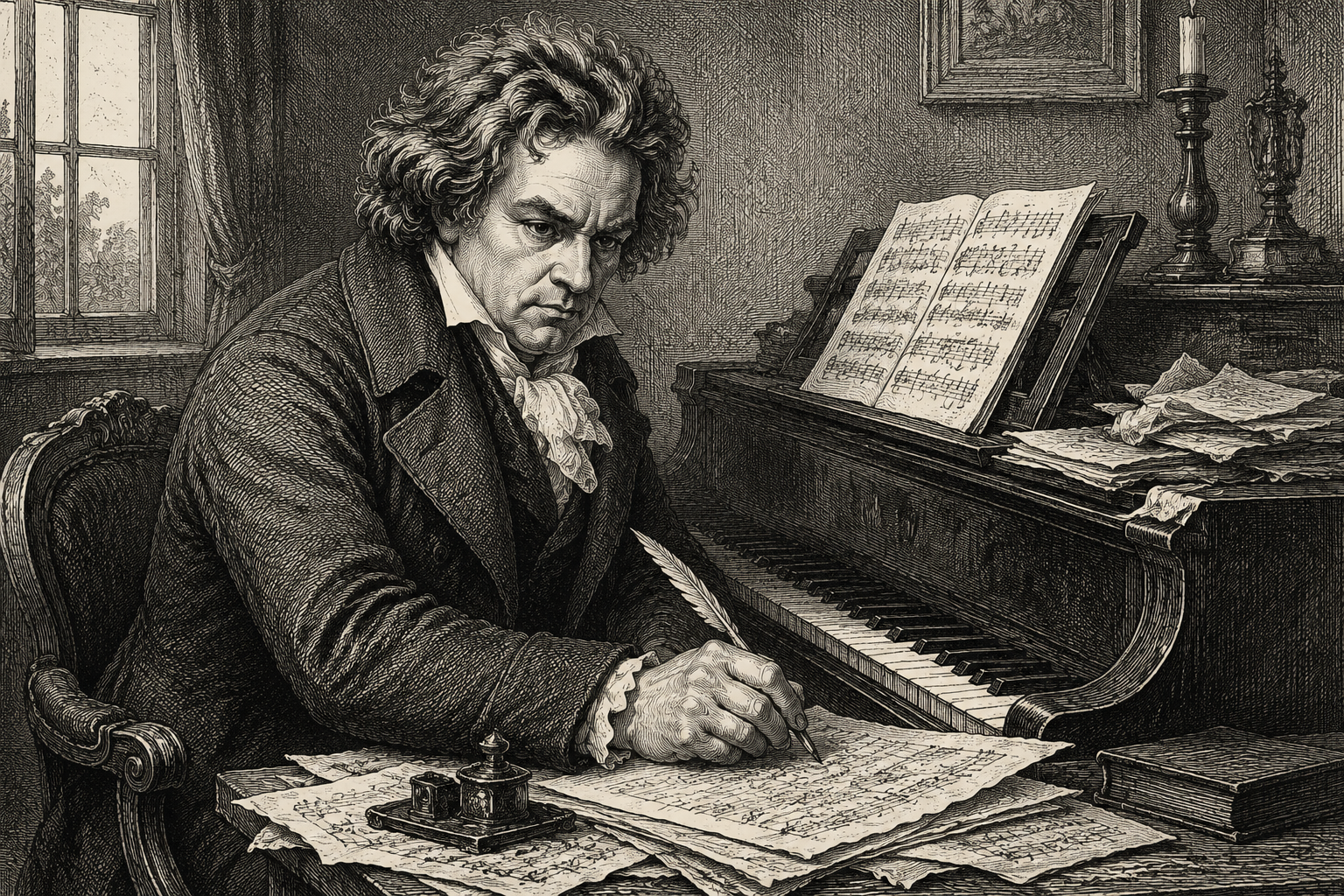
Before computers, notation software, and digital tools, composers created their music entirely by hand. With a quill, ink, or pen, they carefully wrote every note, rhythm, and musical instruction on paper.
Composing was a long and detailed process. Many composers created several drafts before reaching the final version of a piece. They often changed melodies, rewrote sections, and explored new musical ideas directly on the manuscript. Some composers carried their musical thoughts in their minds, imagining entire passages before putting them onto paper.
Walking, reflecting, and listening internally were important parts of the creative process. Without recording devices, composers had to develop a powerful musical memory and an extraordinary ability to imagine sounds that did not yet exist.
Once a composition was finished, handwritten copies were often prepared for musicians who would perform the work. Before modern printing became common, professional copyists played an important role by creating readable versions of the music for orchestras, ensembles, and performers.
Today, these handwritten manuscripts are valuable historical documents. They reveal not only the music itself but also the personality and working habits of the composers who created them. The careful handwriting of Johann Sebastian Bach reflects his organized approach to composition, while the energetic and sometimes chaotic pages of Ludwig van Beethoven show his intense creative process.
A musical manuscript is more than a collection of notes. It is a window into the mind of the composer — a record of ideas, discoveries, corrections, and moments of inspiration. Through these handwritten pages, we can see how great music was born long before the digital age.